In this guide
- Understanding Your TerrainHopper: Built for Adventure, Not City Streets
- UK Legal Classifications: Class 2 and Class 3 Mobility Vehicles
- UK National Parks: Your TerrainHopper Playground
- Beaches and Coastal Exploration
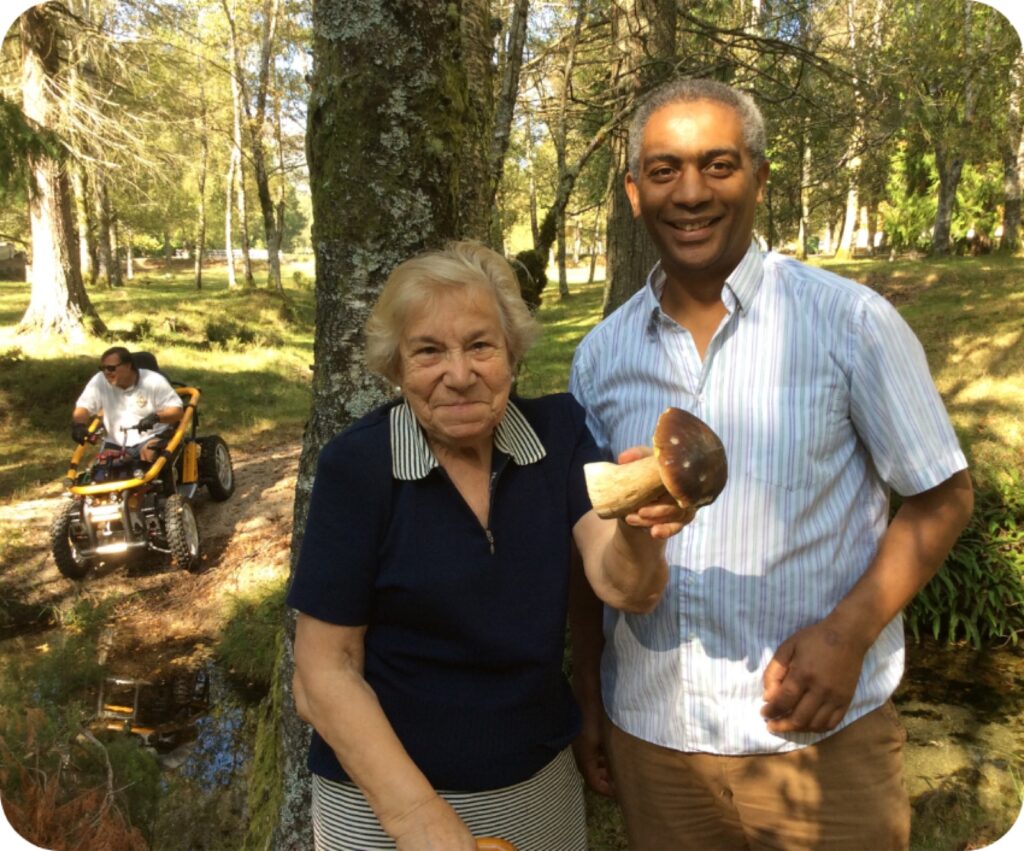
- Forests, Woodlands, and Rural Trails
- Safety, Preparation and Care
- Your Adventure Begins Here
TerrainHoppers are all-terrain mobility vehicles built for outdoor exploration. They use patented suspension, high ground clearance (around 120–250mm), high-torque motors and a reinforced chassis so you can handle mud, rocks, sand, ruts and slopes. They’re built for access, not indoor manoeuvrability.
Understanding Your TerrainHopper: Built for Adventure, Not City Streets
Where TerrainHopper Excels
- Mountain trails and hills: The Overlander 4ZX can climb gradients up to 35°. The Flatlander handles 30% inclines. That means scenic ridgelines and summits like Pen y Fan become realistic.
- Beaches: Soft sand and shingle normally stop standard scooters instantly. TerrainHopper’s traction and torque let you reach the waterline.
- Forest and woodland trails: Roots, mud and rutted ground become manageable instead of impassable.
- Moorland and countryside: Heather, pasture and grassy farm tracks open up.
- Rocky terrain and riverbeds: Independent suspension absorbs jolts from stones and boulders.
- Shallow water crossings and winter use: With optional waterproofing you can cross shallow streams, and with care you can drive on snow and frozen ground.
Where TerrainHopper Is Not Ideal
- Shops and shopping centres: At roughly 850mm wide and well over 100kg, it’s too large and heavy for aisles.
- Public transport: It’s not foldable or easily carried onto buses, trains or planes.
- Hospitals and tight indoor spaces: You’re often not banned, but corridors and lifts are cramped.
- Busy pavements: While legal at pavement speed, it’s not designed for weaving through crowds.
Think of TerrainHopper as an outdoor 4×4, not an indoor scooter. Many people keep a smaller mobility aid for errands and use the TerrainHopper for real terrain.
UK Legal Classifications: Class 2 and Class 3 Mobility Vehicles
In UK law, powered mobility vehicles fall into classes. TerrainHopper models are Class 2 or Class 3, and that affects where you can go.
Class 2: Overlander 4ZX
- Speed: Up to 4mph in pedestrian areas. You may travel on the road at safe speed when necessary, especially in rural or low-traffic areas.
- Where you can use it: Pavements (4mph), certain public rights of way, bridleways and byways that allow motorised access, private land with permission, and suitable roads.
- Licence, tax, registration: None required.
- Insurance: Sensible for theft, damage and liability, though not mandatory.
Class 3: Flatlander
- Speed: Up to 8mph on the road, and 4mph on pavements.
- Equipment: Class 3 vehicles must have lights, mirrors, horn and indicators. The Flatlander is built with these.
- Road use: You can drive on the road, but it’s not intended for fast traffic.
- Age: You must be at least 14 to drive a Class 3 vehicle on the road.
- Licence, tax, registration: Not required.
Both classes can be used, where lawful, on certain public rights of way, byways open to all traffic (BOATs), forestry trails and private land. Always check local signage and landowner rules.
UK National Parks: Your TerrainHopper Playground
National Parks are where TerrainHopper really shines. With planning, you can explore moorland, forest tracks, lakeside paths and upland viewpoints instead of staying in car parks.
Peak District National Park
Gritstone edges, moorland plateaus and limestone valleys. TerrainHopper users have reached viewpoints and upland tracks that would normally be inaccessible. The Overlander 4ZX is ideal; confident Flatlander users can enjoy established trails with moderate gradients.
Lake District National Park
Mountains, wooded valleys and lakeshores. Many lower-level lakeside and woodland routes are realistic. The Flatlander works on gentler ground; the Overlander can take on rougher sections. Always check gradient, surface and weather.
Yorkshire Dales National Park
Dale valleys, riverside tracks, limestone pavements and moor edges. Through Access The Dales you can get route recommendations, guided outings and even borrow a TerrainHopper.
Snowdonia / Eryri National Park
Dramatic ridges and mountain views in Wales. Valley and forest routes plus accessible low-level mountain paths are possible. Mountain weather changes fast, so plan clothing, daylight and battery range.
Other notable areas include the Brecon Beacons, Northumberland National Park, the New Forest (great for Flatlander users), and accessible parts of the Scottish Highlands. Before you go, speak to park staff or accessible-outdoors groups.
Beaches and Coastal Exploration
For many wheelchair users, beaches are heartbreaking: you can see the sea but can’t reach it. TerrainHopper changes that.
- Sandy beaches: Wide tyres, torque and ground clearance let you cross soft sand where normal scooters instantly sink.
- Pebble and shingle: Independent suspension reduces vibration so travel is surprisingly comfortable.
- Rocky tidal flats: With careful driving and good visibility, the Overlander’s ground clearance helps you navigate firmer rock sections and tidal shallows.
- Shallow water: Optional waterproofing lets you drive through shallow pools and firm wet sand, but tides still demand respect.
Check local rules (some councils restrict motorised access), and plan around tide times. After any saltwater use, rinse with fresh water to protect the vehicle and stay within warranty conditions.
Forests, Woodlands, and Rural Trails
Many Forestry England / Scotland / Wales sites have gravel access roads and waymarked loops that are ideal for all-terrain mobility vehicles. Popular examples include Thetford Forest, Kielder, Forest of Dean and Galloway. Stick to designated trails, as off-track forest floors can hide drainage ditches and soft bog.
Britain is also criss-crossed with historical tracks:
- Bridleways: Generally for walkers, cyclists and horses. Motorised access can be sensitive; check locally.
- Byways Open to All Traffic (BOAT): Public routes where motor vehicles are allowed. These rough farm and moorland tracks are excellent TerrainHopper territory.
- Green lanes / restricted byways: Rules vary. Read signage and respect restrictions.
Wherever you ride, follow the Countryside Code: close gates, avoid damaging trails, slow down for walkers, cyclists and horse riders, and leave no trace.
Safety, Preparation and Care
A little planning keeps you safe and protects the landscape. Charge fully and know your realistic range. Check tyres, lights and indicators. Bring a phone, essential medication, basic first aid and weatherproof clothing. Research gradient, surface and distance, and tell someone where you’re going and when you’ll return. After the ride, rinse off mud, grit and salt (use a gentle hose, not a pressure washer) and check bolts, harnesses, suspension and wiring.
Your Adventure Begins Here
TerrainHopper is freedom. It lets you share beaches instead of watching from the car park, reach viewpoints instead of settling for the visitor centre, and travel moorland, forest and fell on your own terms. Ready to see what’s possible? Call 01472 566566 or book a test drive.
Next step
See a TerrainHopper on real terrain
A test drive is free at our Lincolnshire base, or we bring a TerrainHopper to you. No pressure, no commitment.

